
Insights & Lived-Experience Guidance for a Neuro-Inclusive World
Deep dives into ADHD, AuDHD, emotional regulation, workplace inclusion, trauma-aware design and system reform... written through lived experience, clinical insight and organisational expertise.
- ADHD & AuDHD
- Emotional Regulation
- Workplace Inclusion
- Leadership
- System Change
- Education
- Clinical & Pathway
- Neurodivergent Life
Featured Articles
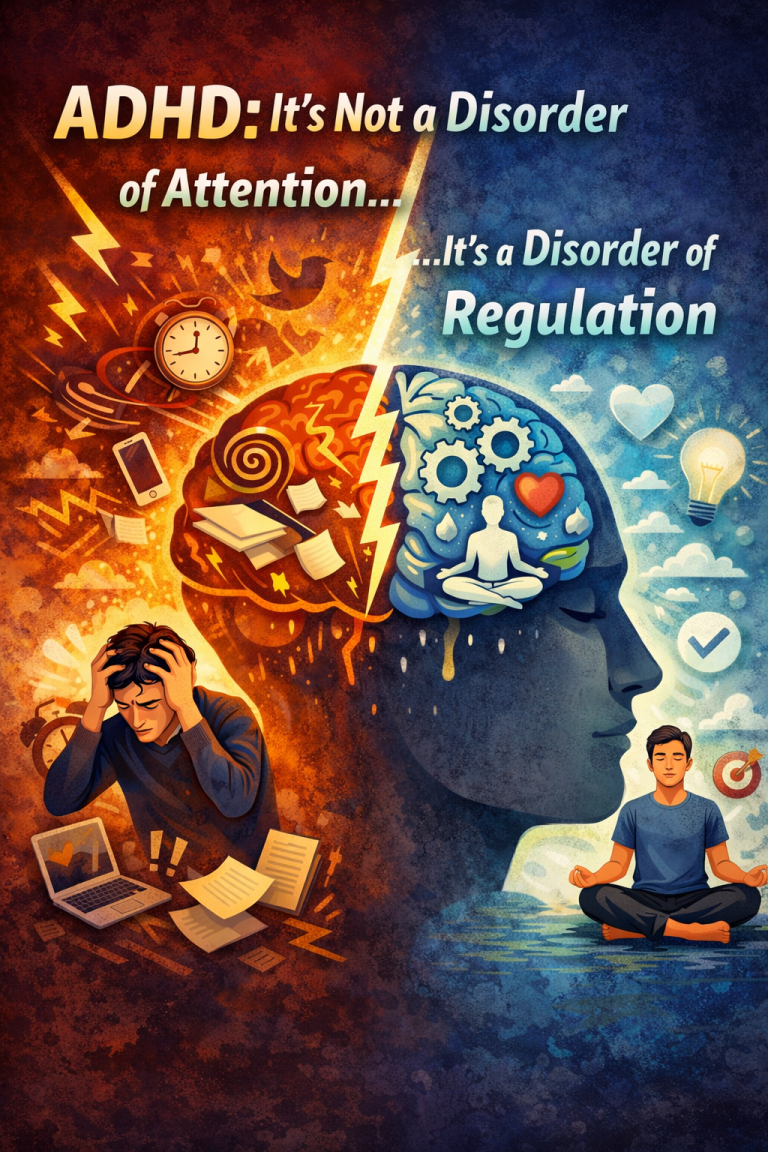
ADHD Is Not a Disorder of Attention… It’s a Disorder of Regulation
For as long as ADHD has been publicly discussed, it has been described as a problem of attention.
You can’t focus.
You’re easily distracted.
You struggle to concentrate on what matters.
This explanation is so familiar that it often goes unquestioned. It appears in diagnostic criteria, school reports, workplace feedback, and casual conversation. It has shaped how people with ADHD are treated… and how they come to understand themselves.
And yet, for many people who live with ADHD, this explanation has always felt… incomplete.
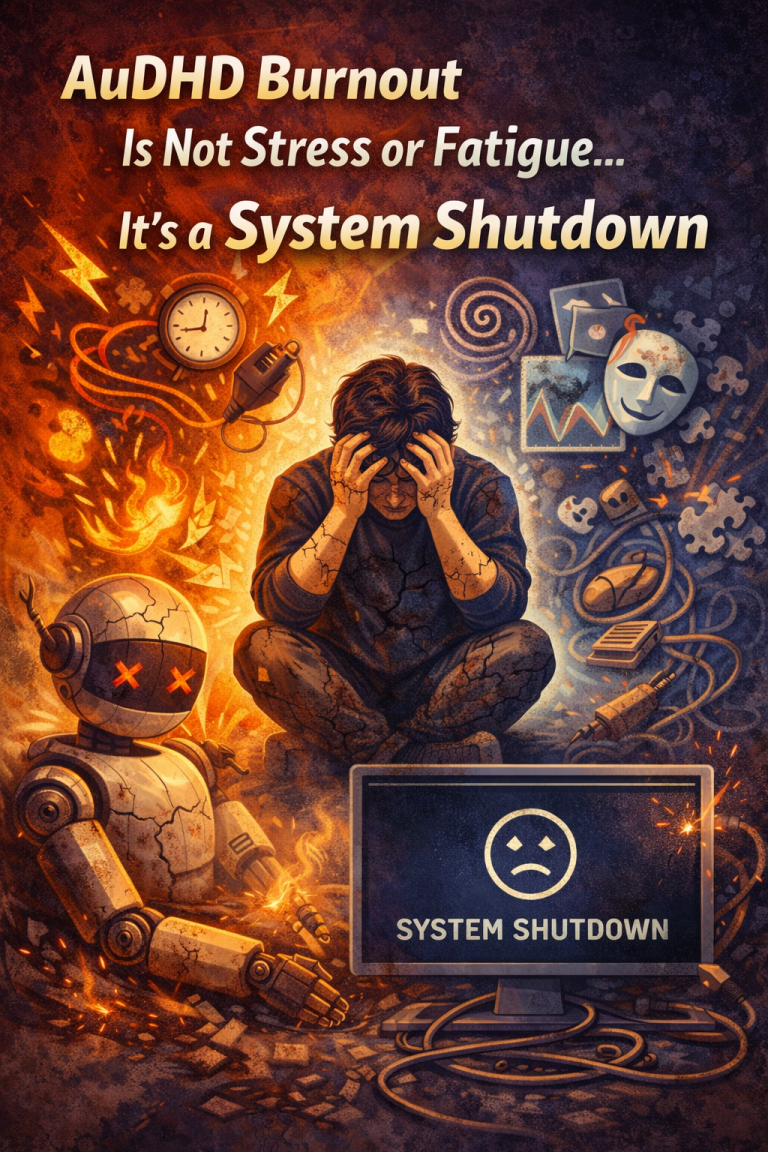
AuDHD Burnout Is Not Stress or Fatigue… It’s a System Shutdown
There is a particular moment that many AuDHD people can identify with uncomfortable precision.
It is the moment when everything stops working.
Not gradually.
Not gently.
Not in a way that feels like ordinary tiredness.
One day you are functioning… perhaps struggling, perhaps stretched, but still moving… and then suddenly you are not.
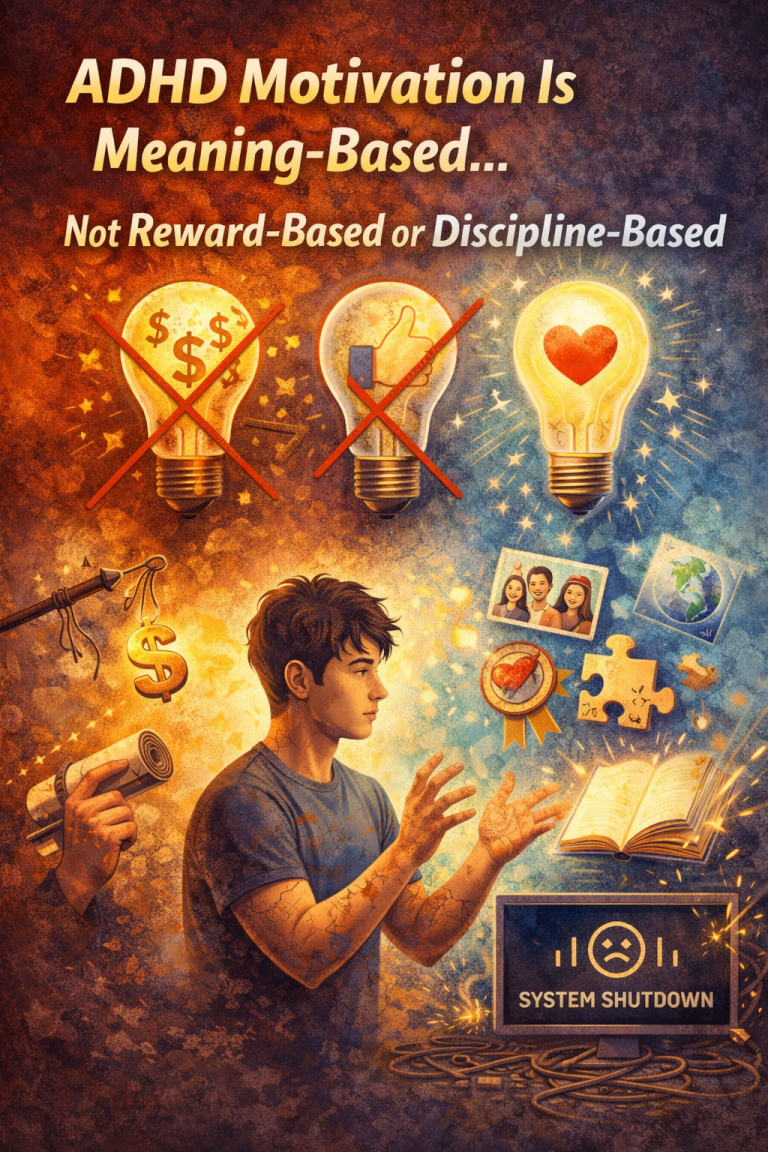
ADHD Motivation Is Meaning-Based… Not Reward-Based or Discipline-Based
There is a sentence that follows people with ADHD everywhere.
You just need more discipline.
It appears in childhood, in school reports and classroom interventions. It resurfaces in adulthood, in workplaces, self-help books, productivity systems, and internal self-talk. It is offered as advice, criticism, encouragement, and diagnosis all at once.
If you cared more, you’d do it.
If you tried harder, you’d follow through.
If the consequences mattered enough, you’d be motivated.
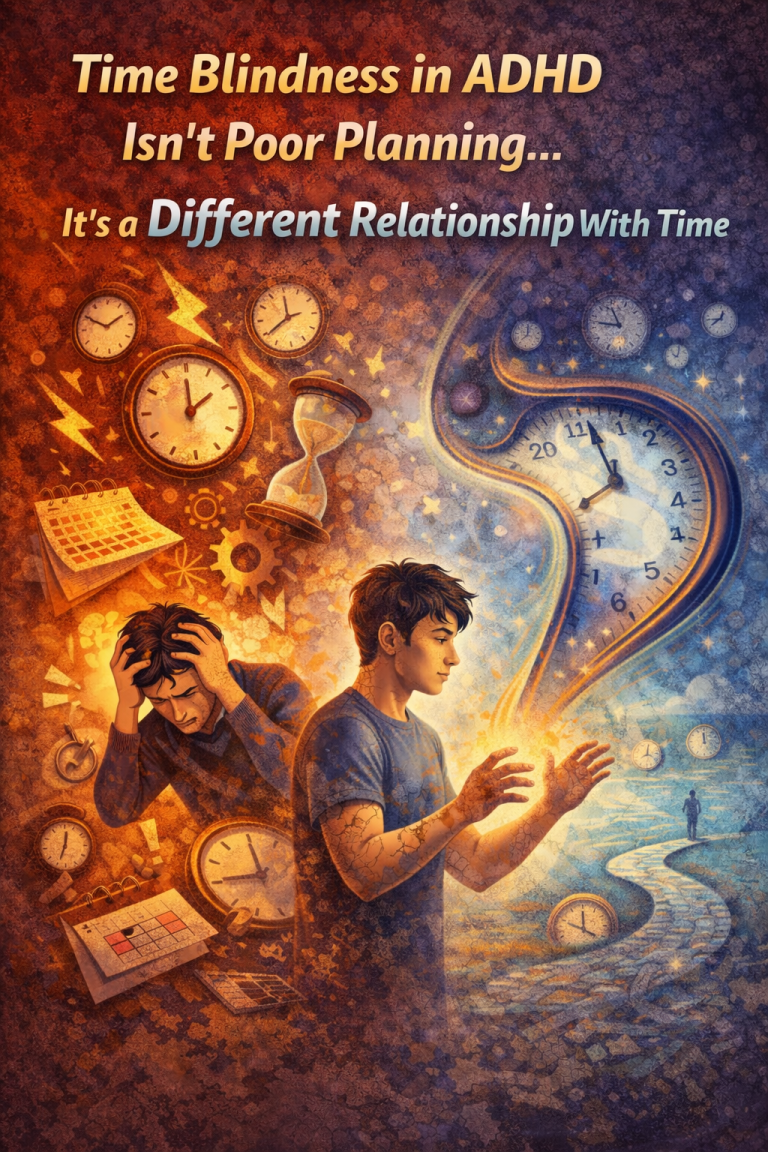
Time Blindness in ADHD Isn’t Poor Planning… It’s a Different Relationship With Time
There is a particular kind of shame that follows people with ADHD throughout their lives.
It shows up in phrases like:
- You’re always late.
- You never plan ahead.
- You underestimate how long things take.
- You leave everything to the last minute.
Over time, these observations harden into character judgements.
Careless.
Disrespectful.
Disorganised.
Irresponsible.
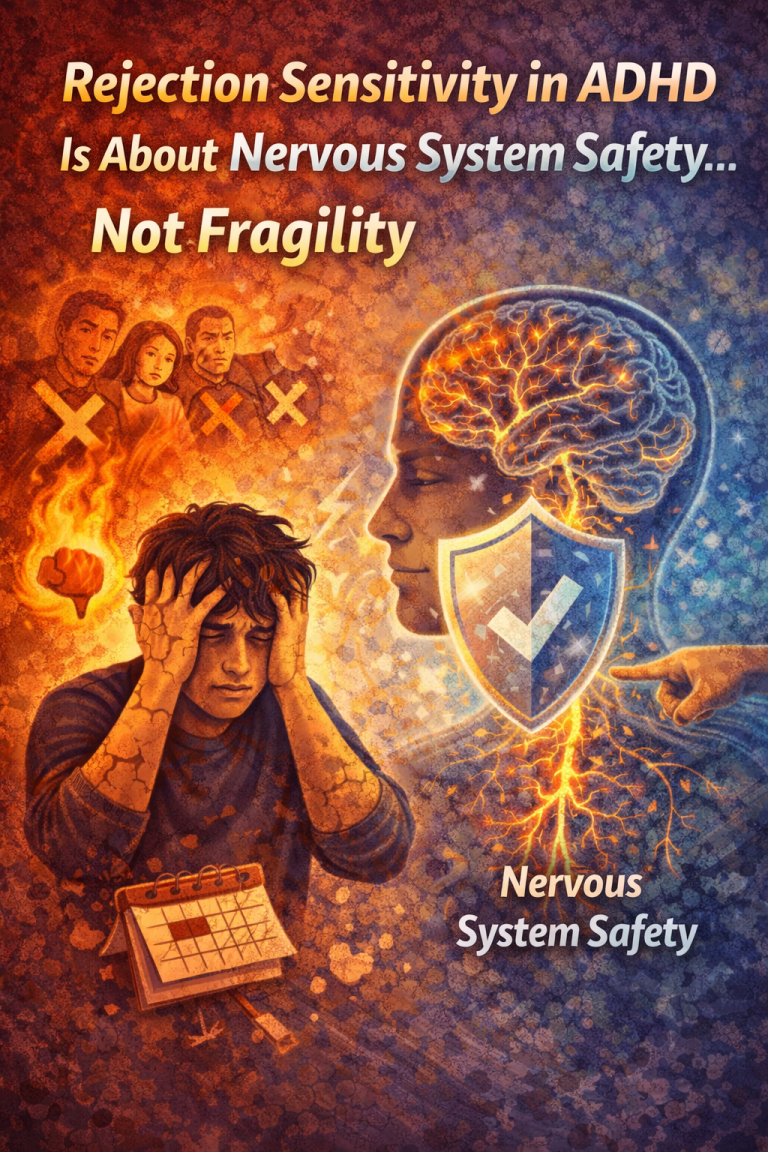
Rejection Sensitivity in ADHD Is About Nervous System Safety… Not Fragility
There is a particular speed to the reaction that people with ADHD often describe.
It happens before thought.
Before interpretation.
Before intention.
A look changes.
A tone shifts.
A message lands slightly differently than expected.
And the body reacts.
Heart rate jumps.
The stomach drops.
Heat floods the chest or face.
Thoughts scatter, loop, or go blank.
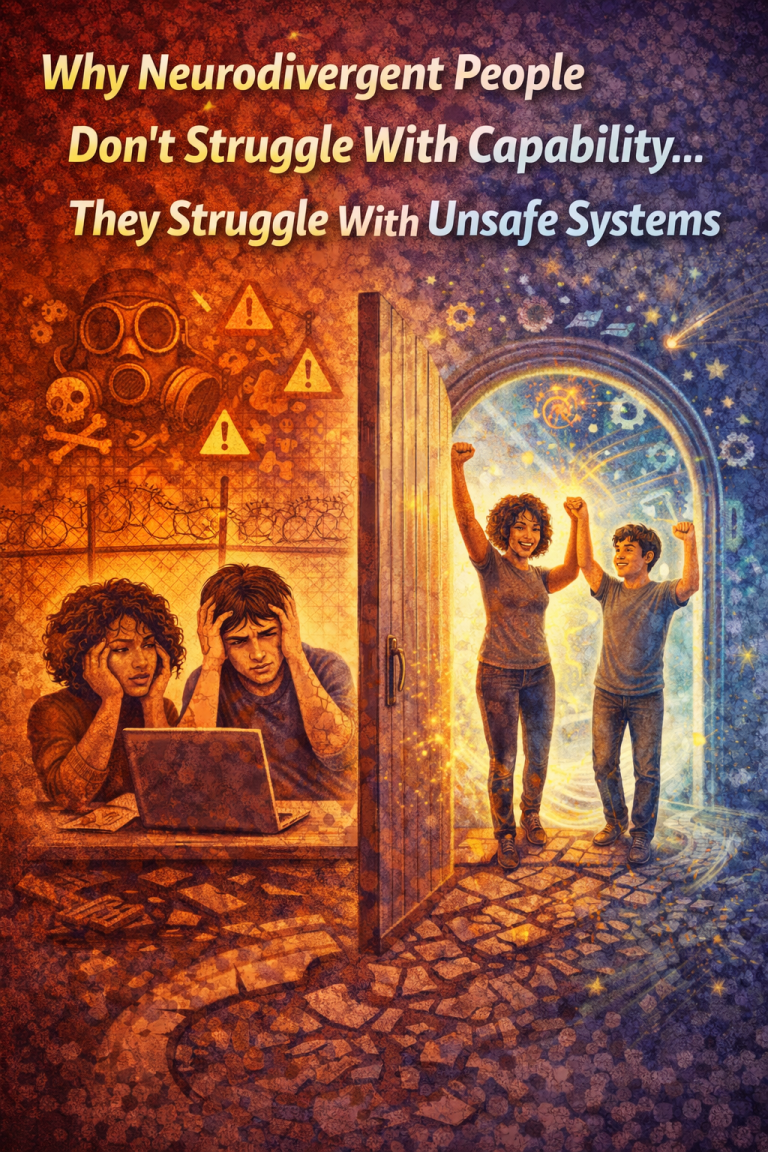
Why Neurodivergent People Don’t Struggle With Capability… They Struggle With Unsafe Systems
There is a contradiction that sits at the centre of almost every neurodivergent life.
On the one hand, neurodivergent people — particularly those with ADHD and AuDHD — are demonstrably capable. Often exceptionally so. They show flashes of depth, creativity, problem-solving, and insight that are unmistakable. They can work at extraordinary intensity when conditions are right. They can think laterally, relationally, systemically. They can carry complexity that others struggle to hold.
On the other hand, these same people repeatedly burn out, disengage, collapse, or are labelled as inconsistent, unreliable, or underperforming.
Insight Series
ADHD Through a Nervous System Lens (8-part series)
Series Goal:
To reframe ADHD from a narrative of behavioural deficit and effort failure to one of nervous system regulation, biology, and context.
By translating neuroscience into lived, practical understanding, it seeks to reduce shame, prevent burnout, and support individuals, clinicians, educators, and organisations to design environments that work with ADHD nervous systems rather than against them—shifting the focus from forcing performance to restoring access, safety, and sustainable capacity.
The System Doesn’t Fail People Randomly
(6-part series)
Series goal:
To shift the conversation from individual failure to systemic responsibility by revealing how predictable patterns of burnout, exclusion, and disengagement are created by design... not deficit.
This series aims to help leaders, clinicians, policymakers, and organisations recognise where their systems quietly demand resilience, masking, and self-erasure, and to replace those dynamics with variance-aware, human-centred redesign that anticipates difference, protects capacity, and enables ordinary people to participate without harm.
Workplace Survival → Workplace Safety
(5-part series)
Series goal:
Workplace Survival → Workplace Safety aims to shift how work is understood by making visible the hidden nervous-system dynamics that shape performance, burnout, and behaviour.
Rather than offering solutions, the series reframes familiar workplace problems as outcomes of system design, showing how survival is mistaken for engagement, professionalism filters for certain nervous systems, burnout is predictable, safety is structural, and capacity only returns after safety. Its purpose is to replace individual blame with systemic clarity and create a more accurate foundation for meaningful change.
The Future of Neuro-Inclusion
(5-part series)
Series goal:
The Future of Neuro-Inclusion exists to shift neuro-inclusion from accommodation and compliance into system design and cultural intelligence... showing how workplaces, services, and institutions can be built around real human nervous systems rather than forcing people to adapt to broken structures.
This series reframes neuro-inclusion as a foundation for performance, sustainability, and innovation, not a specialist add-on, and makes the case that designing for difference is how we build systems that work for everyone.
Emotional Dysregulation Explained
(7-part series)
Series goal:
To reframe emotional dysregulation as a nervous-system and environmental issue rather than a personal failing, replacing shame-based narratives with physiological understanding.
It aims to help individuals, leaders, clinicians, and organisations recognise how safety, pacing, and design shape emotional capacity—so regulation is supported through insight and structure, not demanded through self-control.
ADHD Leadership: The Hidden Operating System of Modern Business
(7-part series)
Series goal:
This series exposes how ADHD shapes leadership cognition, decision-making, energy, risk tolerance, and emotional load — and why traditional business structures extract value from ADHD traits while failing to support the nervous systems that produce them.
It offers leaders language, validation, and system-level insight — shifting the narrative from “self-management failure” to organisational design responsibility.
Featured Posts
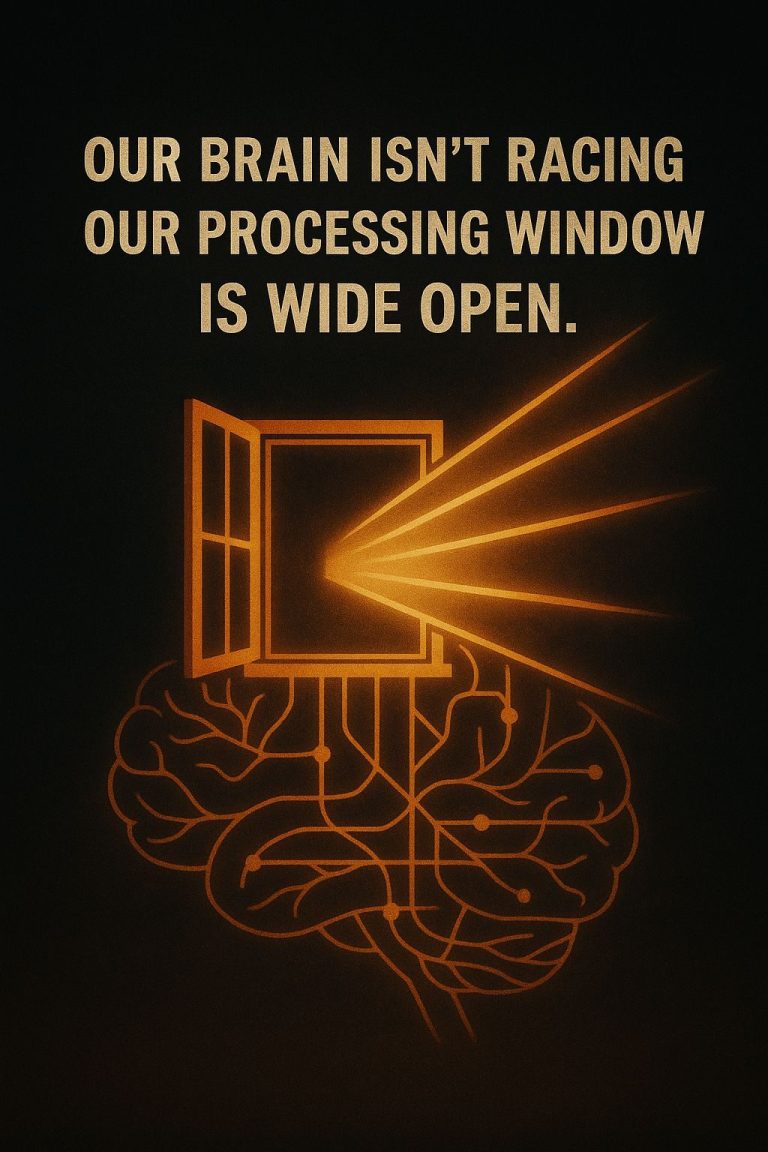
People hear “my brain won’t stop” and assume chaos.
But what they’re hearing isn’t chaos... it’s capacity without containment.
ADHD minds don’t simply think fast.
They absorb fast.
They interpret fast.
They make connections faster than the world expects them to.
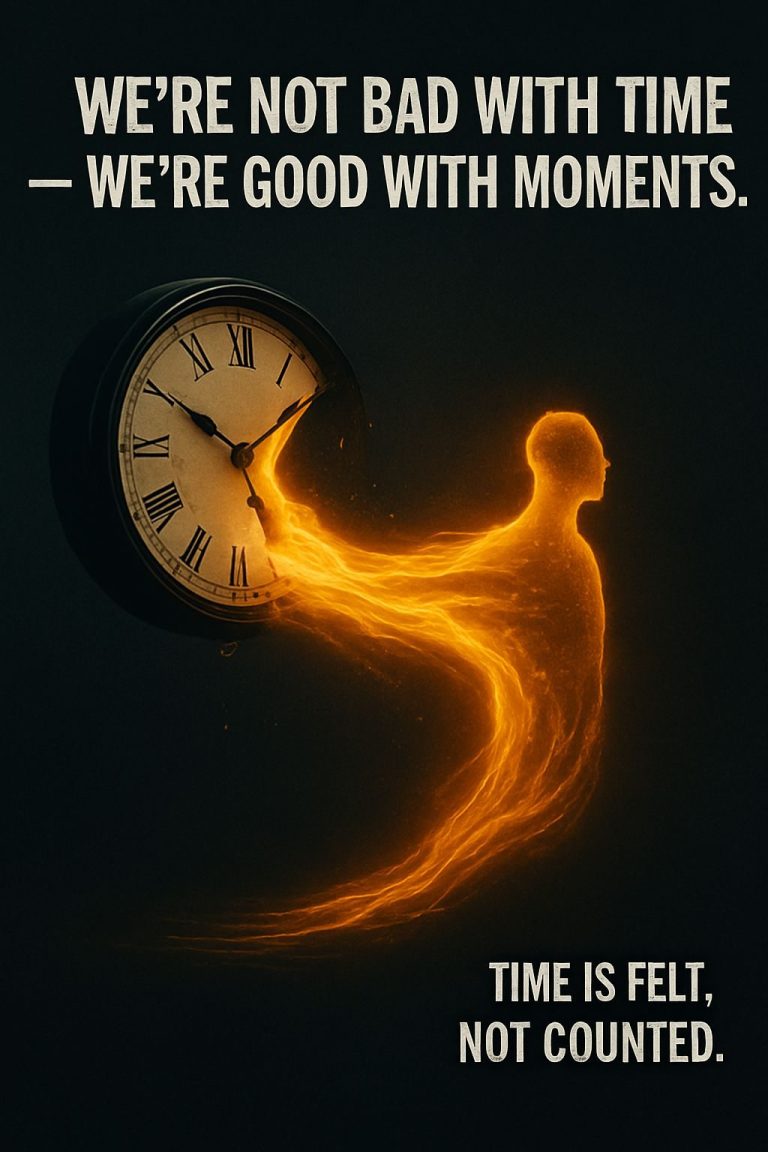
ADHD “time blindness” gets framed as irresponsibility, chaos, or carelessness.
But look closely... it isn’t about not valuing time.
It’s about experiencing time differently.
Most people live in clock time: minutes, hours, tidy boxes.
But we live in felt time: meaning, momentum, emotional gravity.
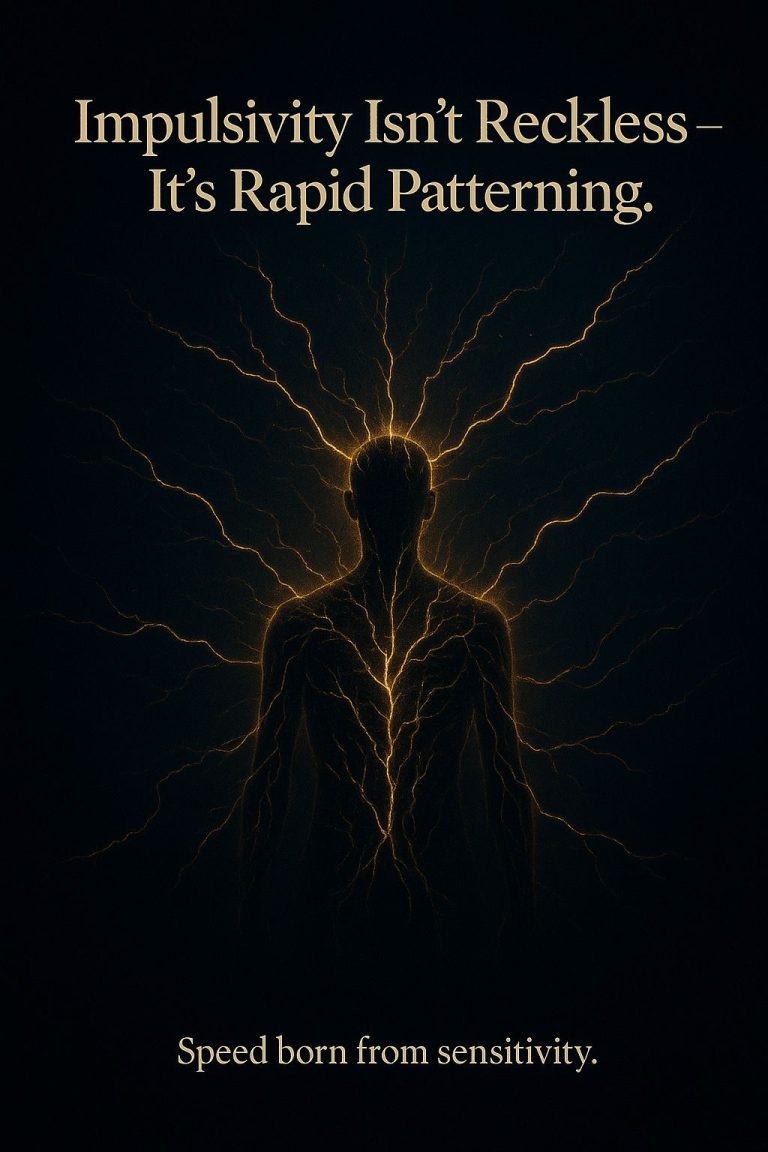
ADHD impulsivity is framed as recklessness.
But that’s the wrong lens.
It’s not a flaw in judgment... it’s a speed in patterning.
We notice, connect, and respond in microseconds.
Our nervous systems run on immediacy: sensing data, emotions, tone shifts, possibilities... all at once.
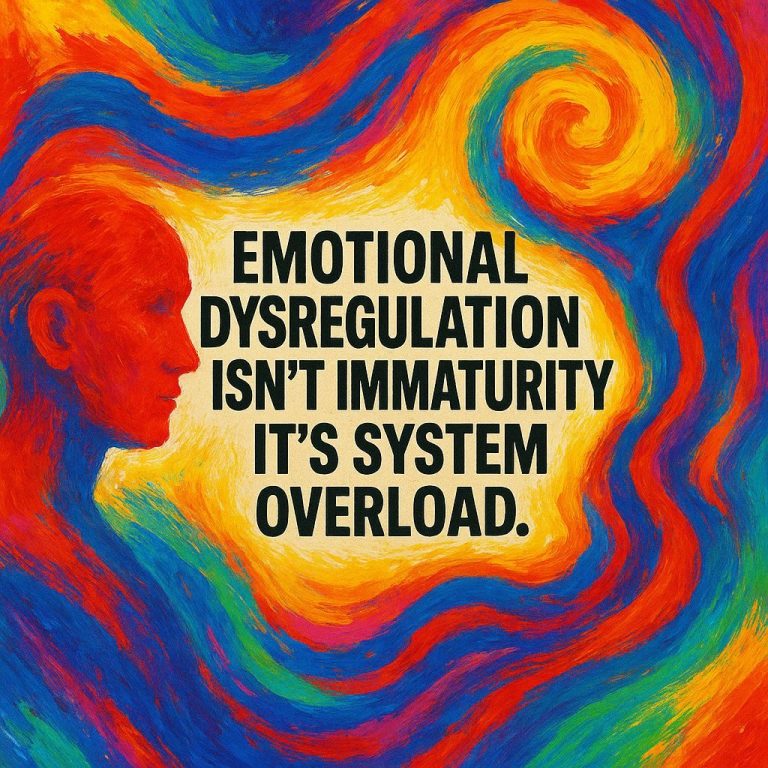
ADHD emotions aren’t “too big.”
They’re just too unfiltered.
We feel everything... in high definition.
Every joy, every jab, every shift in energy around us.
It’s not drama; it’s data. Our nervous system doesn’t use a dimmer switch. It runs the full spectrum... all at once.
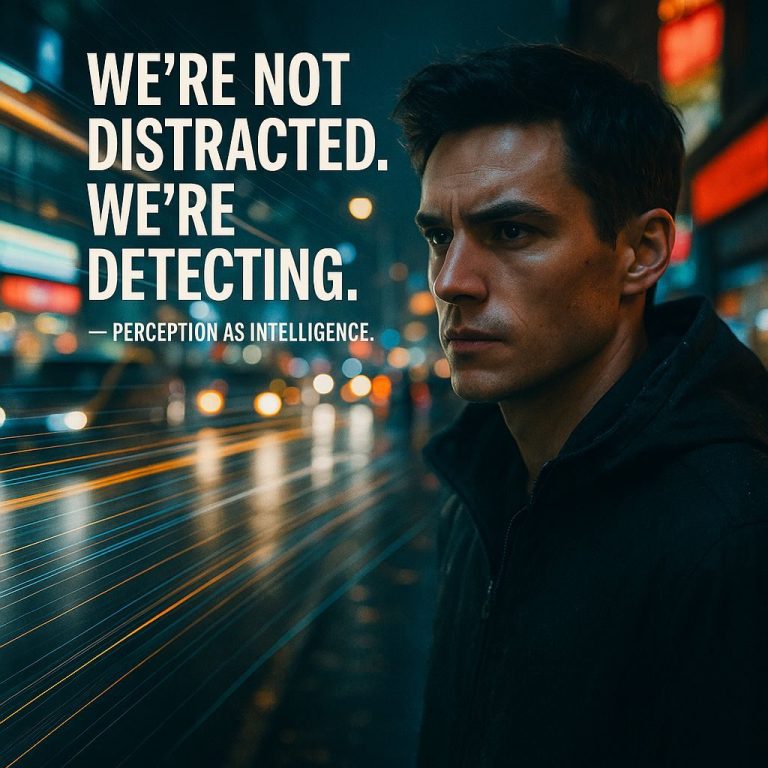
ADHD isn’t a deficit of attention.
It’s a different distribution of it.
We don’t fail to focus... we fail to filter.
Our minds register more: sound, tone, texture, movement, energy, emotion, possibility.
While others hear noise, we hear data.
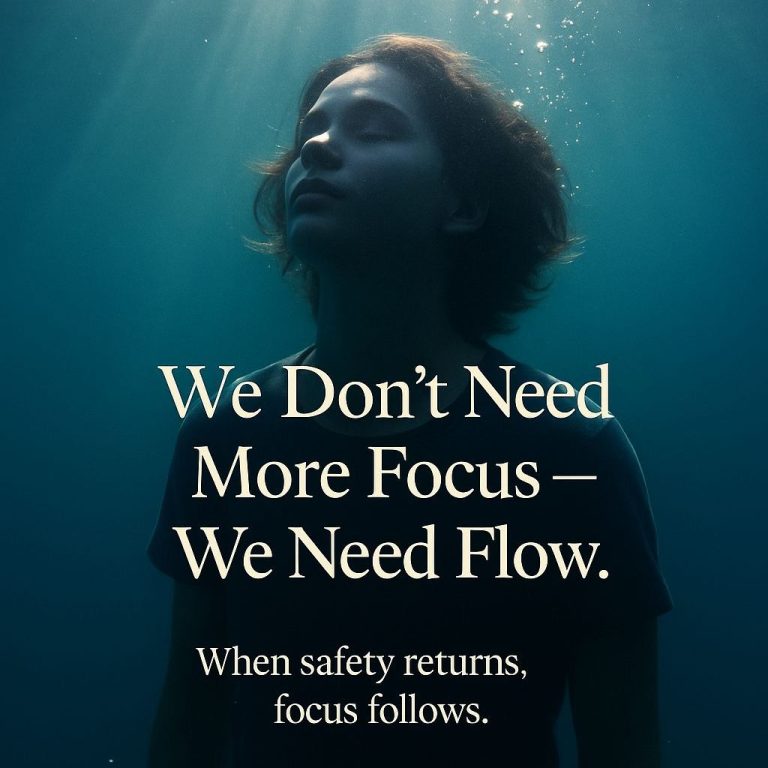
Every productivity guru says the same thing: just focus.
But for ADHD minds, focus isn’t a switch you flick... it’s a state you fall into.
We don’t force focus.
We find it... in the rare moments when challenge meets curiosity, and stakes meet safety.
Get weekly neurodivergent insights straight to your inbox.
Clinical clarity, lived experience truth, workplace redesign and ND-safe tools... no fluff, no shame.

For Individuals
Clarity, emotional regulation, therapy and support built around your nervous system.
For Organisations
Training, audits and consulting that redesign the systems people depend on.