
Articles
Longer-form writing on ADHD, emotional regulation, neurodivergence, therapy, and system design.
These articles explore ideas in more depth... drawing on clinical frameworks (CBT, ACT, DBT), lived experience, and real-world system failures... with the aim of increasing clarity, reducing shame, and improving how environments respond to neurodivergent people.
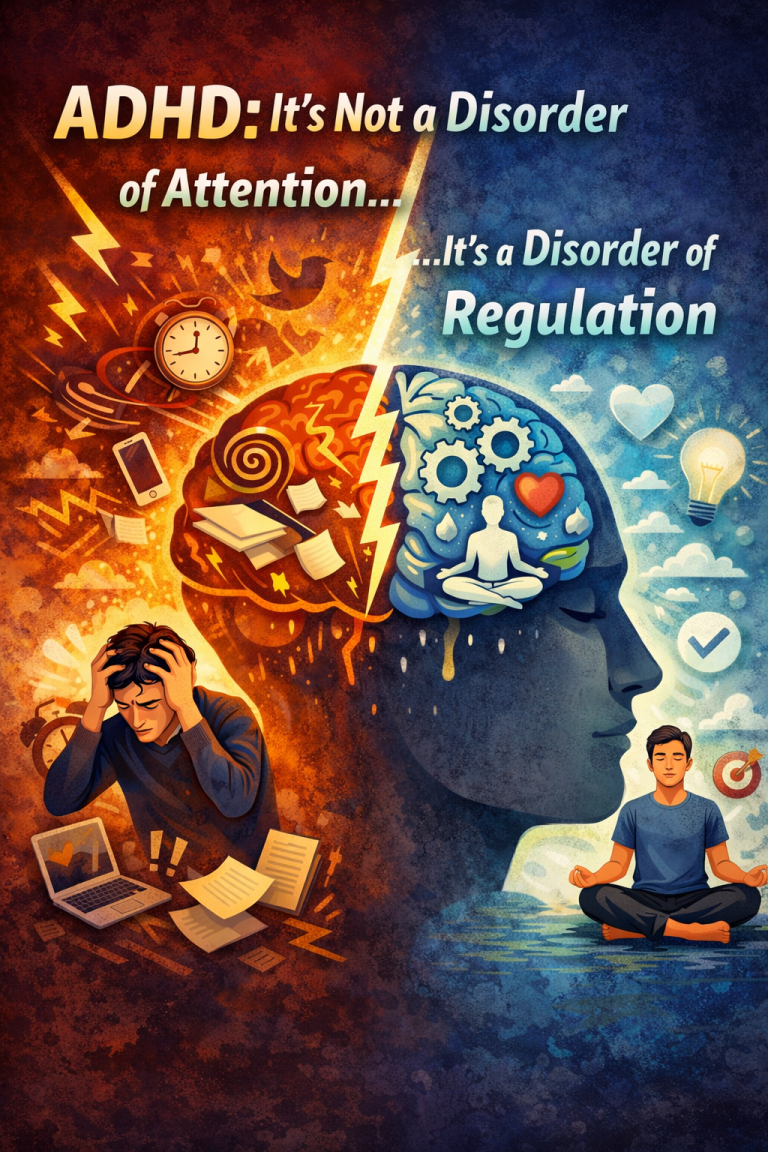
ADHD Is Not a Disorder of Attention… It’s a Disorder of Regulation
For as long as ADHD has been publicly discussed, it has been described as a problem of attention.
You can’t focus.
You’re easily distracted.
You struggle to concentrate on what matters.
This explanation is so familiar that it often goes unquestioned. It appears in diagnostic criteria, school reports, workplace feedback, and casual conversation. It has shaped how people with ADHD are treated… and how they come to understand themselves.
And yet, for many people who live with ADHD, this explanation has always felt… incomplete.
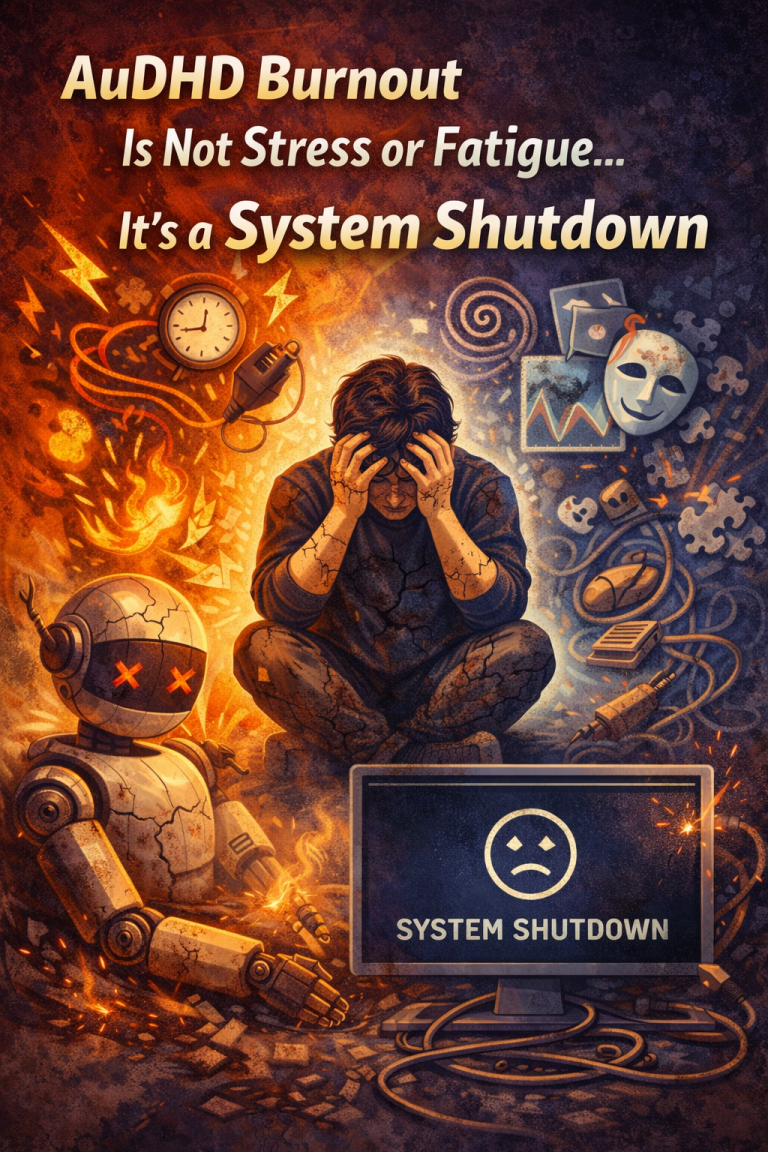
AuDHD Burnout Is Not Stress or Fatigue… It’s a System Shutdown
There is a particular moment that many AuDHD people can identify with uncomfortable precision.
It is the moment when everything stops working.
Not gradually.
Not gently.
Not in a way that feels like ordinary tiredness.
One day you are functioning… perhaps struggling, perhaps stretched, but still moving… and then suddenly you are not.
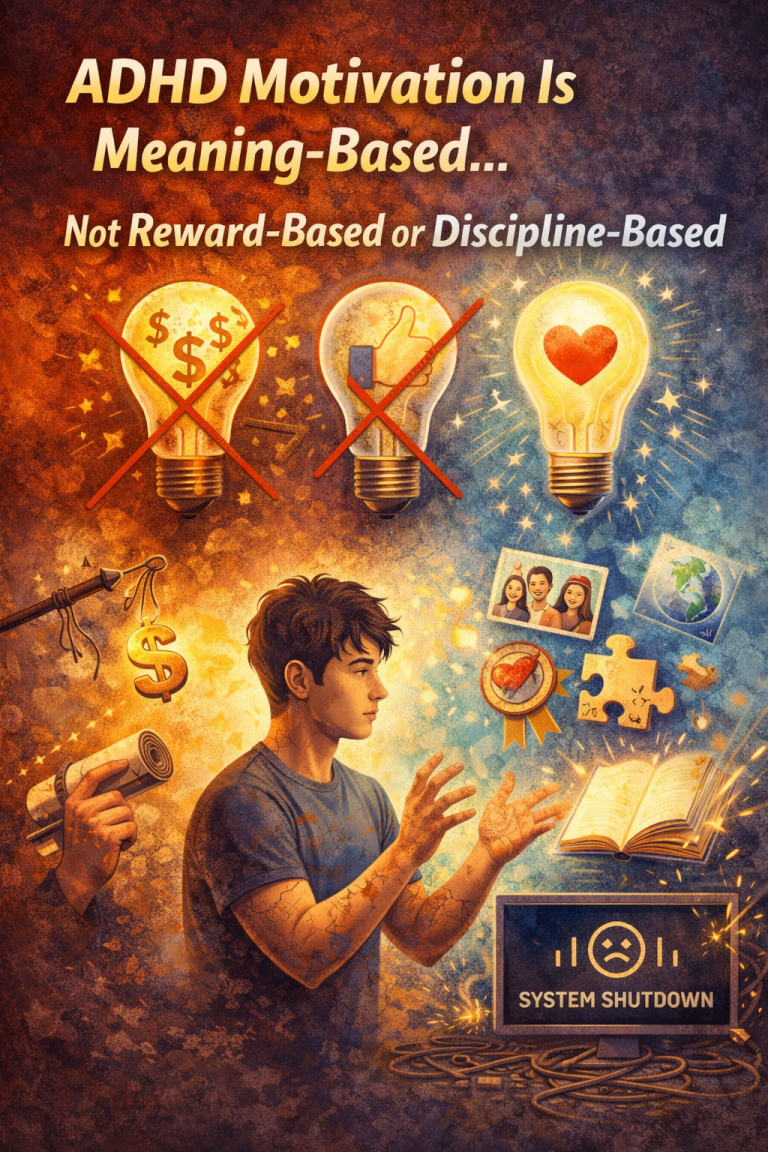
ADHD Motivation Is Meaning-Based… Not Reward-Based or Discipline-Based
There is a sentence that follows people with ADHD everywhere.
You just need more discipline.
It appears in childhood, in school reports and classroom interventions. It resurfaces in adulthood, in workplaces, self-help books, productivity systems, and internal self-talk. It is offered as advice, criticism, encouragement, and diagnosis all at once.
If you cared more, you’d do it.
If you tried harder, you’d follow through.
If the consequences mattered enough, you’d be motivated.
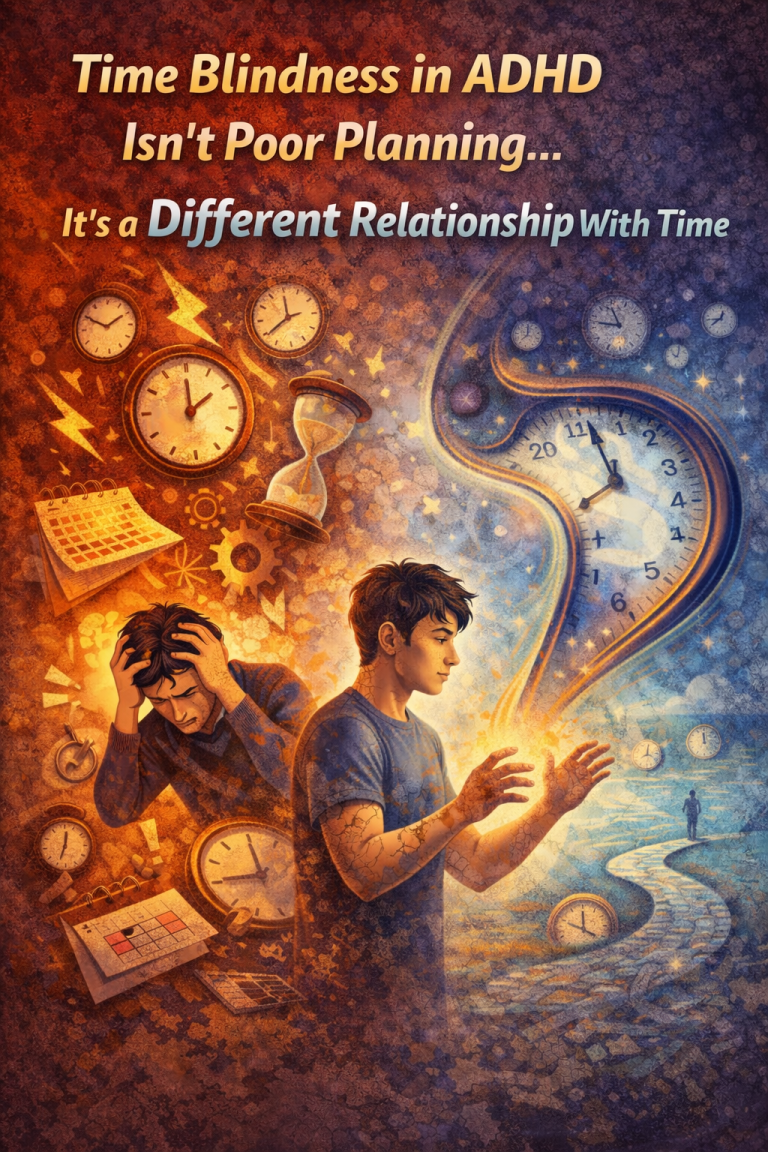
Time Blindness in ADHD Isn’t Poor Planning… It’s a Different Relationship With Time
There is a particular kind of shame that follows people with ADHD throughout their lives.
It shows up in phrases like:
- You’re always late.
- You never plan ahead.
- You underestimate how long things take.
- You leave everything to the last minute.
Over time, these observations harden into character judgements.
Careless.
Disrespectful.
Disorganised.
Irresponsible.
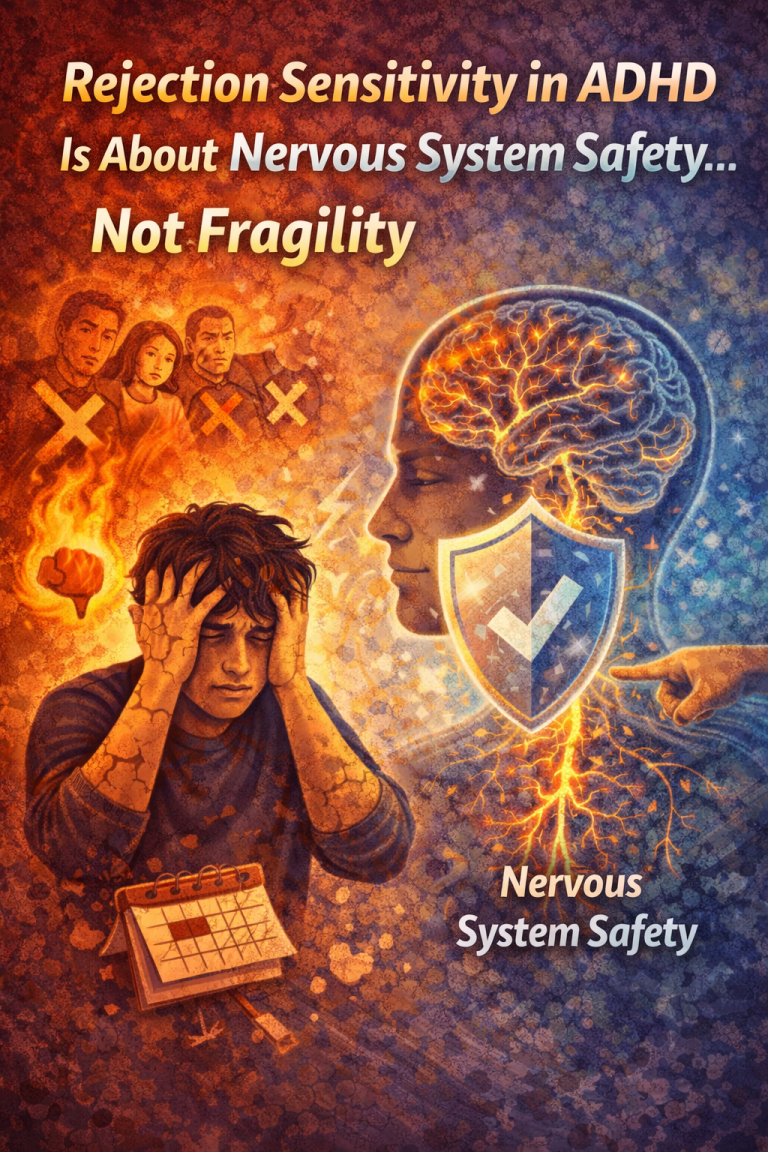
Rejection Sensitivity in ADHD Is About Nervous System Safety… Not Fragility
There is a particular speed to the reaction that people with ADHD often describe.
It happens before thought.
Before interpretation.
Before intention.
A look changes.
A tone shifts.
A message lands slightly differently than expected.
And the body reacts.
Heart rate jumps.
The stomach drops.
Heat floods the chest or face.
Thoughts scatter, loop, or go blank.

Why Neurodivergent People Don’t Struggle With Capability… They Struggle With Unsafe Systems
There is a contradiction that sits at the centre of almost every neurodivergent life.
On the one hand, neurodivergent people — particularly those with ADHD and AuDHD — are demonstrably capable. Often exceptionally so. They show flashes of depth, creativity, problem-solving, and insight that are unmistakable. They can work at extraordinary intensity when conditions are right. They can think laterally, relationally, systemically. They can carry complexity that others struggle to hold.
On the other hand, these same people repeatedly burn out, disengage, collapse, or are labelled as inconsistent, unreliable, or underperforming.