
By Neal Glendenning
ADHD impulsivity is framed as recklessness.
But that’s the wrong lens.
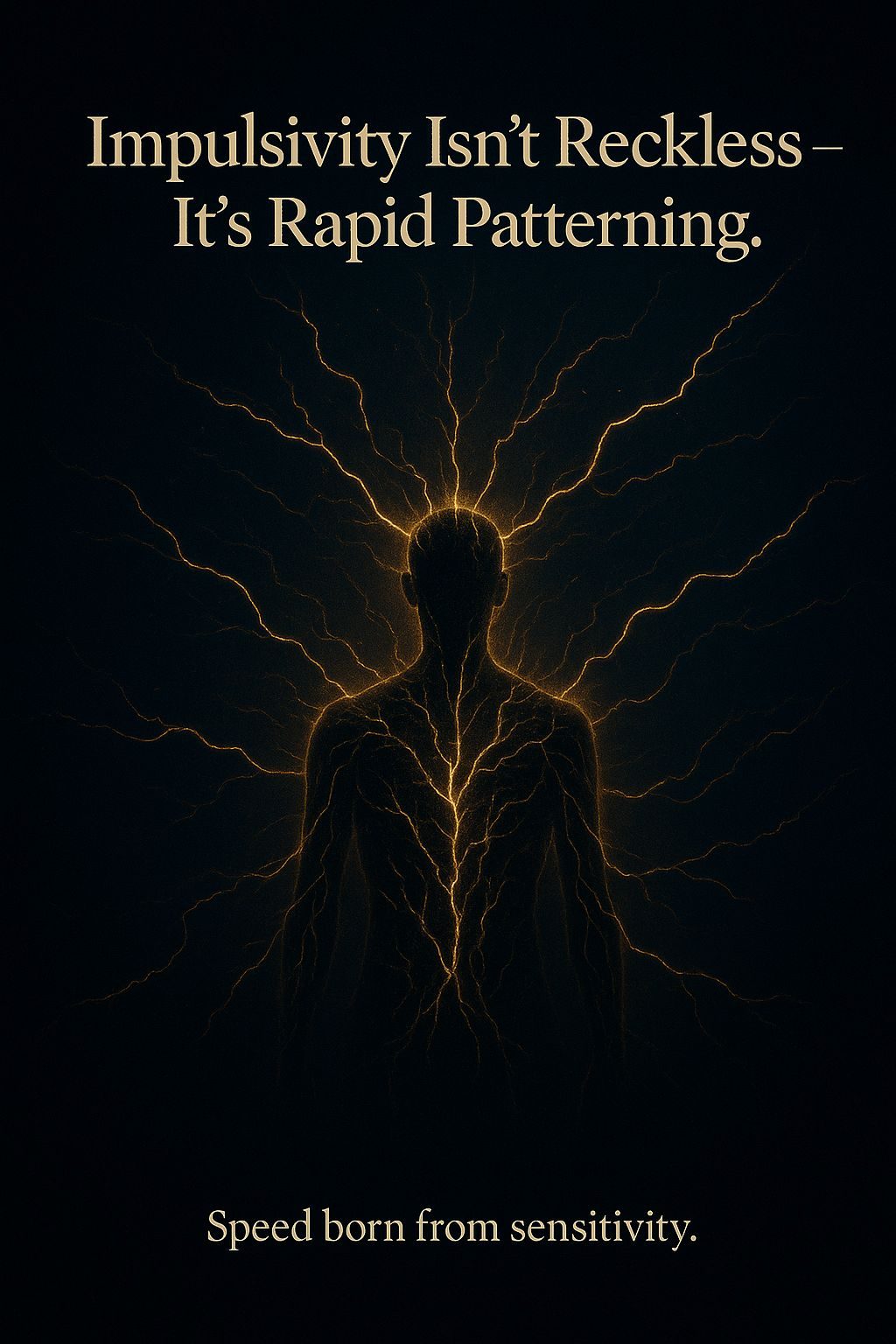
It’s not a flaw in judgment... it’s a speed in patterning.
We notice, connect, and respond in microseconds.
Our nervous systems run on immediacy: sensing data, emotions, tone shifts, possibilities... all at once.
What looks like “acting without thinking” is often “acting before others have finished noticing.”
Sometimes that saves lives.
Sometimes it derails plans.
But at its core, it’s speed born from sensitivity.
We act fast because we feel fast.
Emotion, intuition, and empathy register first... logic catches up later.
That’s not immaturity. It’s sequencing.
Most systems are built for delayed processing... meetings, hierarchies, protocols, approvals.
So when a fast-patterning brain lives in a slow-moving world, it’s misunderstood.
We get called impulsive instead of insightful, reactive instead of responsive.
But here’s the truth: impulsivity is potential energy.
It’s what makes emergency medics run toward chaos, artists follow sparks, entrepreneurs take leaps before the map exists.
It’s the same trait that fuels creativity, courage, and innovation... when met with safety.
Because context decides everything.
In unsafe systems, impulsivity turns to shame.
In safe systems, it turns to brilliance.
You can’t “train it out.”
But you can tune it... with regulation, feedback, and environments that reward rapid intuition instead of punishing it.
Here’s how:
Build pause points, not pressure points. Create micro-moments to check intention before action.
Design feedback loops, not fear loops. Reflect, don’t reprimand.
Encourage experimentation. Quick iteration channels impulse into insight.
The goal isn’t to slow down... it’s to stay connected while moving quickly.
To build systems that can dance with fast minds instead of disciplining them.
Because in the right environment, impulsivity isn’t recklessness.
It’s responsiveness... to life itself.
When you stop punishing speed, you start unlocking genius.
And maybe the question isn’t “how do we make them slow down?”
It’s “how do we keep up?”